



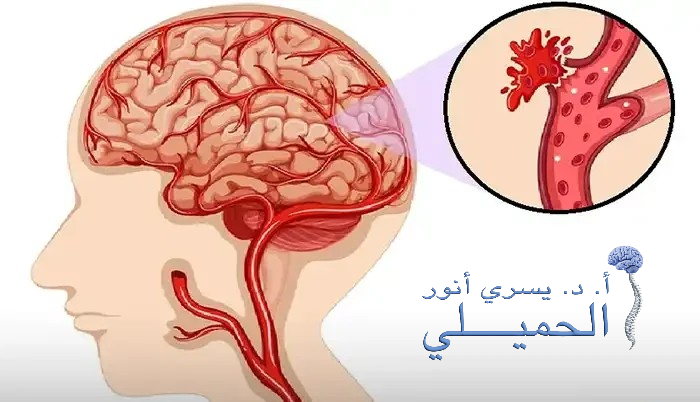
Brain hemorrhage is one of the most dangerous medical emergencies and requires rapid intervention due to its direct impact on brain tissue and vital functions. Bleeding may occur either within the brain tissue itself or in the spaces between the brain and the skull, disrupting oxygen delivery to nerve cells and causing sudden, rapidly worsening health changes. The seriousness of brain hemorrhage lies in how quickly it can progress and its potential to lead to physical and neurological complications that may be life-threatening if not treated in time. Therefore, awareness of this condition and understanding its nature are essential steps toward early diagnosis and receiving proper medical care. In this article, we highlight brain hemorrhage symptoms, related factors, and prevention methods.
Brain Hemorrhage
Brain hemorrhage is a type of stroke that occurs due to the rupture or leakage of a blood vessel inside the brain, leading to blood accumulation within the brain tissue or in surrounding spaces.
Bleeding may occur within the brain tissue itself or between the brain and the skull, such as in subarachnoid hemorrhage or epidural hemorrhage. This bleeding increases intracranial pressure, which can damage brain cells and disrupt vital brain functions.
Brain hemorrhage often results from the rupture of brain arteries due to severely high blood pressure, which disrupts the supply of blood, nutrients, and oxygen to brain cells. As pressure from the bleeding continues, nerve cells begin to deteriorate or die, and the condition may worsen over time, leading to serious complications such as partial or complete paralysis—especially if treatment is delayed or bleeding is not controlled.
Symptoms of Brain Hemorrhage
Symptoms vary depending on the hemorrhage location, size, and speed of progression. However, there are common warning signs that require immediate medical attention due to the severity of this condition and its direct effect on brain function.
Common Symptoms of Brain Hemorrhage
Severe, Sudden Headache
A sudden, intense headache is among the most common symptoms. Patients often describe it as the worst headache of their life, especially in cases of subarachnoid hemorrhage. It may be accompanied by a strong sensation of pressure or “explosion” inside the head. Sudden, painful headache is the first symptom in most patients.
Nausea and Vomiting
Nausea and vomiting occur due to increased intracranial pressure and may be persistent in some cases, especially if the bleeding affects brain control centers.
Weakness or Numbness in the Limbs
The patient may experience weakness, numbness, or tingling in an arm or leg—often on one side of the body. In severe cases, this may progress to partial or complete paralysis.
If bleeding occurs in the right side of the brain, movement is typically affected on the left side of the body, and vice versa.
Difficulty Speaking or Understanding
Bleeding may affect language centers in the brain, leading to:
Difficulty speaking
Difficulty understanding speech
Inability to form understandable sentences
Difficulty reading or writing
Visual Disturbances
These may include:
Double vision
Partial or complete loss of vision
Blurred vision
This may also be accompanied by noticeable changes in pupil size (abnormally wide or narrow pupils).
Loss of Balance and Coordination
This is especially common when the hemorrhage affects the cerebellum, and may appear as:
Difficulty walking
Inability to coordinate movements
Tremors or shaking in the hands
Changes in Mental Status
Such as:
Confusion and disorientation
Poor concentration
Changes in behavior or personality
Reduced awareness or cognitive decline
Seizures and Loss of Consciousness
The patient may develop seizures, especially without a prior history of epilepsy. In severe cases, the condition may progress to loss of consciousness or coma.
Difficulty Swallowing
Difficulty swallowing may occur due to involvement of nerves responsible for this function.
Important Note
Brain hemorrhage symptoms can resemble those of ischemic stroke and other neurological conditions, so symptoms alone are not sufficient for diagnosis. The appearance of any of these warning signs requires immediate evaluation by a neurologist or emergency department, as rapid diagnosis and treatment can be lifesaving and reduce complications.
Types of Brain Hemorrhage
Because the brain has multiple regions and surrounding membranes, the term “brain hemorrhage” (or intracranial bleeding) is a general term that includes several different types. Healthcare providers clarify these precisely to determine severity and appropriate management.
In general, brain hemorrhage can be divided into two main categories based on location:
First: Intracranial Bleeding Outside Brain Tissue
Bleeding occurs in spaces surrounding the brain without directly affecting brain tissue, including:
Subarachnoid hemorrhage: Occurs in the space between the brain and the arachnoid membrane. It is often sudden and severe. This type occurs when blood collects between the arachnoid layer and the pia mater. Without treatment, it may lead to permanent brain damage or death.
Epidural hemorrhage: Occurs between the skull bones and the outer protective membrane of the brain (dura mater). It is commonly associated with head trauma. Without treatment, rising intracranial pressure can lead to breathing problems, brain cell damage, or death.
Subdural hemorrhage: Occurs between the inner and outer layers of membranes covering the brain. It may develop rapidly or gradually and can be classified into acute and chronic subdural bleeding.
Second: Bleeding Within Brain Tissue
Bleeding affects the brain tissue itself and includes two main forms:
Intracerebral hemorrhage: Occurs within brain lobes, the brainstem, or the cerebellum due to blood accumulation inside brain tissue. It is the second most common cause of stroke and is considered one of the most aggressive types of brain hemorrhage.
Intraventricular hemorrhage: Occurs within the brain ventricles—cavities responsible for producing cerebrospinal fluid that protects the brain and spinal cord. This type often occurs in newborn infants.
Causes
There are several possible causes of brain hemorrhage, including:
Chronic high blood pressure (the most common cause), which weakens vessel walls and increases rupture risk
Aneurysms (bulging/weak vessel walls that may rupture)
Head injuries such as accidents, falls, or severe blows
Blood clotting or bleeding disorders, including those caused by medical conditions or blood-thinning medications
Vascular malformations such as arteriovenous malformations (AVMs)
Brain tumors, which may cause internal bleeding due to pressure on vessels or vessel invasion
Age-related or chronic-disease-related vessel disorders
Blood clots or blocked cerebral arteries that may convert into hemorrhagic stroke
Other chronic diseases affecting blood vessels or clotting
How to Respond to Brain Hemorrhage Symptoms
If any brain hemorrhage symptoms appear, immediate emergency care is essential. Early diagnosis is a major factor in improving survival and reducing complications. Physicians diagnose the condition through clinical examination and imaging studies such as CT scans or MRI to determine the exact location and size of the hemorrhage.
Treatment depends on severity and location, and mainly focuses on stopping the bleeding, reducing intracranial pressure, treating the underlying cause, and minimizing brain tissue damage. Treatment may include:
Surgical intervention: Such as draining collected blood through a small skull opening, removing part of the skull to reduce pressure, or performing a craniotomy to access and control the bleeding source before closing the skull again.
Medical treatment: Medications to control bleeding, regulate blood pressure, prevent clotting problems, and lower intracranial pressure.
In severe cases, the patient may require additional support, such as oxygen therapy, intravenous fluids, or feeding through an IV line or feeding tube, along with close monitoring in the intensive care unit (ICU) to ensure stability.
Prevention of Brain Hemorrhage
Prevention is one of the most effective ways to reduce the risk of brain hemorrhage. Key preventive measures include:
Controlling blood pressure through a balanced diet, regular physical activity, and adherence to prescribed medication
Quitting smoking, as it increases the risk of stroke and bleeding
Preventing head injuries by using protective equipment during sports or driving
Regular medical checkups, especially for those with hypertension or bleeding/clotting disorders
Diagnosis of Brain Hemorrhage
Acute brain injuries are emergencies that require rapid and accurate evaluation. The doctor begins with clinical assessment and asks important questions such as:
Was there a head injury? What was the nature of the injury?
What symptoms are currently present?
Was there loss of consciousness? If yes, for how long?
This information helps estimate hemorrhage location, size, and severity. The physician may then order imaging tests to confirm diagnosis, including:
CT scan: Quickly identifies the presence, location, and size of bleeding
MRI: Provides more detailed images of brain tissue and affected areas
Combining clinical assessment with imaging enables the physician to determine the most appropriate treatment plan quickly and accurately.
Conclusion
In conclusion, brain hemorrhage is among the most serious medical conditions and requires high health awareness and rapid action due to potentially life-threatening neurological and physical complications. This article reviewed the concept of brain hemorrhage, its types, causes, symptoms, diagnostic methods, and treatment approaches, emphasizing that early detection and rapid medical intervention are crucial in lowering mortality and improving recovery outcomes. Prevention—particularly blood pressure control and avoiding head injuries—remains the cornerstone of risk reduction. Recognizing symptoms and never ignoring them may be the true difference between recovery and permanent complications.
Contact us via WhatsApp
Frequently Asked Questions
1. Does brain hemorrhage always cause death?
No, not necessarily. Severity depends on the hemorrhage location and size, how quickly it is detected, and the speed of medical intervention. Many cases can be treated with partial or full recovery, especially with early diagnosis.
2. Is full recovery possible after brain hemorrhage?
Yes, some patients can recover well, particularly if the bleeding is limited and treated quickly. However, some patients may require a long rehabilitation period to manage residual neurological effects such as weakness in movement or speech.
3. What is the difference between brain hemorrhage and ischemic stroke?
An ischemic stroke occurs when a blood vessel is blocked and blood flow to part of the brain is cut off, while a brain hemorrhage occurs when a blood vessel ruptures and blood leaks into or around the brain. Both are emergencies, but the cause and treatment differ.
Add a Comment