



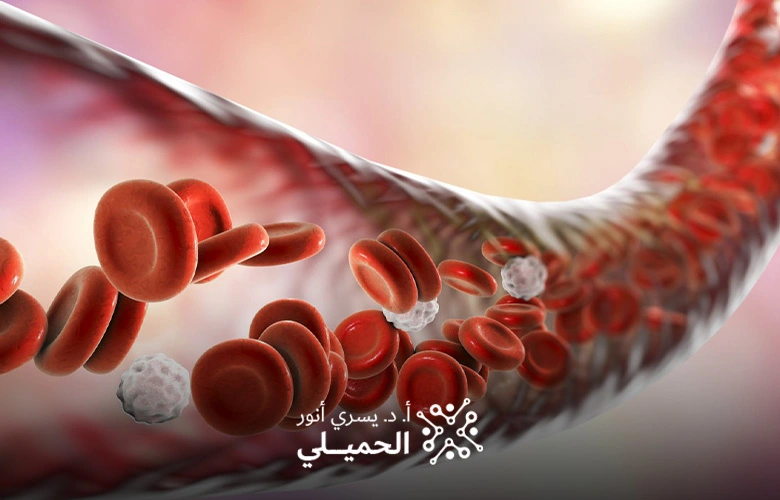
With the advancement of medicine and the development of surgical techniques, Professor Dr. Yousre Anwar El-Hemyly – Professor of Neurosurgery and Spine Surgery at the Faculty of Medicine, Cairo University – and his assisting team strive to provide the best blood clot evacuation surgical services. Surgical intervention in some cases is considered necessary to restore the patient’s health and normal functions and save their life.
Dr. Yousre and his team possess high skills and extensive experience in the field of neurosurgery, ensuring the highest levels of care and quality for patients. The team uses the latest surgical techniques and medical equipment to ensure accurate and safe evacuation of blood clots, focusing on minimizing complications and achieving the best results for patients. Here are some details.
Blood Clots in the Brain
Internal blood clots in the brain are an accumulation of blood inside the skull, usually occurring as a result of a ruptured blood vessel in the brain. It can also happen due to injuries such as a car accident or a fall. Blood can accumulate in brain tissues or under the skull, putting pressure on the brain.
Cerebral blood clots may result from ruptured blood vessels due to injury, severe hypertension, brain infections, or brain surgeries.
Common symptoms of blood clots in the brain include:
- Severe headache.
- Nausea.
- Vomiting.
- Weakness.
- Paralysis.
- Mental confusion.
- Loss of consciousness.
It should be noted that blood clots in the brain are considered an emergency and usually require immediate treatment, which often includes surgical intervention to remove the blood clot to relieve pressure on the brain and avoid serious complications.
Types of Blood Clots in the Brain
Types of blood clots in the brain include:
Subdural Hematoma
This type occurs when blood vessels burst between the brain and the outer membrane covering the brain (dura mater). Blood leakage leads to the formation of a blood clot that presses on brain tissues, causing a gradual loss of consciousness as the blood clot grows over time and may lead to death.
There are three types of hematoma: acute, subacute, and chronic, which differ in the timing of symptom onset and severity.
The risk of this type of blood clot increases:
- With advancing age.
- People who take aspirin or other blood-thinning medications daily.
- People who abuse alcohol.
Epidural Hematoma
This type occurs when blood vessels burst between the outer membrane of the dura mater and the skull. Blood then leaks between the dura mater and the skull, forming a blood mass that puts pressure on brain tissues.
It is often the result of injury and can be fatal if it affects an artery in the brain.
Intracerebral Hematoma
This type is called a hematoma and occurs when blood accumulates in brain tissues. Its causes can be multiple, such as injury, rupture of swollen blood vessels (aneurysm), hypertension, or tumors.
Diseases can cause sudden blood leakage in the brain. Head injuries cause severe blood clots that can be fatal.
How are Blood Clots Evacuated?
Blood clot evacuation is usually done surgically according to the type and size of the clot, and options include:
Surgical Drainage
If the blood is collected in a specific area and has turned from a solid clot to a liquid, the doctor may create a small opening in the skull and use suction to remove the fluid.
Craniotomy Surgery
Large blood clots may require opening part of the skull (craniotomy) to remove the blood. In this procedure, the surgeon removes the affected part of the skull to access and remove the blood clot.
In addition to surgery, additional treatment may be directed for those with conditions such as hypertension, or medications may be given to reverse the effects of blood-thinning medications if the patient was taking them.
As for the steps of surgical blood clot evacuation, they are as follows:
- The patient is prepared, and surgical tools and general anesthesia are prepared. Pre-operative imaging of the affected area is performed using Magnetic Resonance Imaging (MRI) or Computed Tomography Angiography (CTA) to determine the location and size of the blood clot.
- After the patient is placed under general anesthesia, their head is fixed using a Mayfield headholder to ensure stability during the operation.
- The surgeon creates small holes in the skull using a surgical drill to open the skull and brain (Craniotomy) to access the blood clot, where a small piece of bone is removed to reach the affected site.
- Appropriate surgical tools are used to carefully remove the blood clot to avoid damaging surrounding brain tissues.
- The operation is monitored and tracked using neuronavigation tools to ensure accuracy, and intracranial pressure is continuously monitored during the operation.
- After removing the blood clot, the holes in the skull and skin are closed using sterile materials and securely fastened.
Post-Blood Clot Evacuation Surgery
After blood clot evacuation surgery, the patient is directed to the following care and treatment:
- The patient is closely monitored during the recovery period in the hospital to ensure no complications occur.
- Periodic examinations are conducted to ensure the condition is stable and symptoms are improving.
- The wound is cared for and dressings are changed regularly to maintain cleanliness and prevent infection.
- The patient may need physical therapy and rehabilitation sessions to restore the body’s motor and functional abilities.
- Psychological therapy is sometimes recommended to deal with psychological challenges that may arise as a result of the injury and surgery.
- Periodic medical examinations are conducted for the patient to assess progress in healing and ensure that blood clots do not return or new complications appear.
- The patient is advised to follow a healthy diet and consume adequate amounts of fluids to aid in healing.
- Getting enough rest and sleep is encouraged to support the healing process and avoid excessive fatigue.
- Regular follow-up treatment and evaluation with the treating physician are recommended to ensure continued improvement and adaptation to any potential problems.
Best Surgeon for Blood Clot Evacuation in Egypt
Prof. Dr. Yousre Anwar El-Hemyly and his team are considered among the distinguished surgeons in the field of blood clot evacuation for the following reasons:
- Dr. El-Hemyly has a prestigious reputation and extensive experience in this field, and is distinguished by his precision and advanced surgical skills.
- Dr. El-Hemyly provides comprehensive and specialized surgical services, focusing on personal care and dedication to meeting patients’ needs.
- Dr. El-Hemyly uses the latest surgical techniques and procedures to ensure maximum success and safety in treating blood clots.
- His dedication to providing superior medical care and comprehensive support to patients makes him the optimal choice for surgical treatment of these conditions.
In conclusion, we are always here to provide support and guidance to patients and their families throughout every stage of treatment, from assessment and diagnosis to post-surgery. We strive to provide a safe and comfortable environment for patients, emphasizing meeting their individual needs and providing the personal care they deserve.
If you are suffering from a brain blood clot problem, you can contact us to book an appointment with Dr. Yousre for examination and evaluation, and be assured that you are on a date with excellent medical service towards safe recovery.

For direct booking
Book Now