



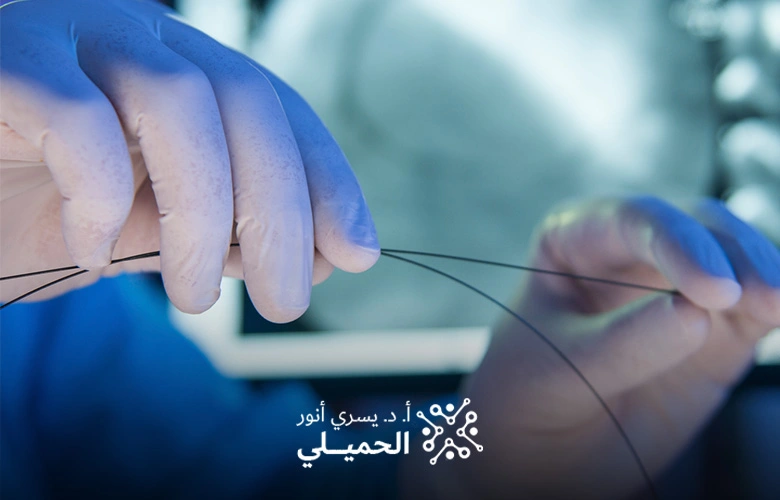
Diagnostic and therapeutic cerebral catheterization is one of the latest medical procedures that involves inserting a very thin tube into the blood vessels in the brain. This is done through the femoral artery or the carotid artery.
Initially, cerebral catheterization was merely a tool for diagnosing disorders and diseases that may affect the arteries in the brain. However, with medical advancements, cerebral catheterization has become a highly precise surgical procedure used by doctors to diagnose and treat many medical conditions that negatively affect the brain, instead of open surgery. This improves the chances of successful treatment without the risk of complications caused by open surgery.
جدول المحتوي
ToggleOverview of Diagnostic and Therapeutic Cerebral Catheterization
Diagnostic cerebral catheterization does not differ much from therapeutic catheterization. Each can be explained in detail as follows:
First: Diagnostic Cerebral Catheterization
Diagnostic cerebral catheterization is performed to view and examine the health condition of the arteries in the brain accurately without the need to open the skull. This is done through a very small opening, maximum 2 mm, in the femoral artery. The thin catheter tube is inserted using an advanced catheterization device to guide it as required until it reaches the neck arteries that feed the blood vessels in the brain, namely the carotid artery and the vertebrobasilar artery. This is done after injecting a contrast material through it to enhance the imaging of the arteries accurately from all angles, thus enabling the doctor to diagnose the patient’s medical condition.
Second: Therapeutic Cerebral Catheterization
Therapeutic cerebral catheterization is exactly like the diagnostic one, but with the addition of many other tools through the same opening made to treat the condition affecting the brain. For example, in cases of acute brain clots, stents can be inserted through the catheterization device to remove the clot from the blocked artery, thus treating the condition more easily without the need for open surgery and avoiding the symptoms and complications that may result from it.
Steps of Diagnostic and Therapeutic Cerebral Catheterization Procedure
Performing diagnostic and therapeutic cerebral catheterization requires conducting several medical examinations and tests, including kidney function tests and complete blood count. The procedure goes through several steps, which can be explained as follows:
- The patient wears sterile hospital-specific clothing.
- Sterilization of the thigh area, usually performed on the right side.
- Anesthetizing the area where the catheter will be inserted using local anesthesia.
- Installing complete monitoring devices for the patient for pulse, respiration, and blood pressure.
- Making a small surgical incision to allow the insertion of the precise catheter in the upper thigh area.
- The catheter is controlled and moved through the catheterization device using X-rays until it is guided to the brain arteries.
- Then the doctor injects a contrast material into the tube to reflect on the visible image to clarify the condition of the affected blood vessels.
- In case the catheterization is being performed for treatment, after the previous step, the doctor can identify the artery to be treated. They then use special and highly precise tools to install a stent or remove the clot depending on the condition of the blocked artery.
- After that, the doctor removes the catheter and dresses the surgical incision to prevent bleeding. The patient remains under observation for approximately 6 hours.
Indications for Diagnostic and Therapeutic Cerebral Catheterization
Cerebral catheterization is used to diagnose and treat many brain disease conditions, including:
- Hardening of blood vessels.
- Stroke.
- Acute brain clot.
- Aneurysms.
- Severe headache.
- Memory loss.
- Difficulty speaking.
- Narrowing of brain and neck arteries.
- Vision disorders.
- Loss of balance and ability to move.
- Arteriovenous malformations in the brain.
- Subarachnoid hemorrhage.
- Brain tumors.
- Shifting of brain tissues.
- Fluid accumulation in the brain.
Advantages of Diagnostic and Therapeutic Cerebral Catheterization
Performing diagnostic and therapeutic cerebral catheterization offers many advantages, including:
- Does not require large surgical incisions.
- Performed under local anesthesia, unlike open surgery which is done under general anesthesia.
- Reduces recovery time.
- In some cases, the patient may be discharged on the same day of the procedure.
- Takes less time compared to traditional brain surgeries.
- Helps avoid complications and effects of open surgery.
Success Rate of Brain Catheterization
Diagnostic and therapeutic cerebral catheterization is considered a successful medical procedure, with a success rate that can reach 95%. However, the success rate of brain catheterization varies depending on the severity of the patient’s health condition and the efficiency and experience of the treating physician.
Duration of Brain Catheterization
Diagnostic and therapeutic cerebral catheterization takes between 1 to 3 hours, and the duration may vary from patient to patient depending on the complexities of their health condition. The duration may increase in some complex cases.
Best Doctor for Diagnostic and Therapeutic Cerebral Catheterization in Egypt
Professor Dr. Yousre Anwar El-Hemyly, Professor of Neurosurgery and Spine Surgery at the Faculty of Medicine, Cairo University, is the best choice for you in performing diagnostic and therapeutic cerebral catheterization. This is due to:
- Prof. Dr. Yousre Anwar El-Hemyly has exceptional and extensive experience in the field of diagnosing and treating various brain diseases, including diagnostic and therapeutic cerebral catheterization.
- Prof. Dr. Yousre Anwar El-Hemyly owns an advanced and developed medical center equipped with the latest equipment, tools, and technologies that help complete treatment procedures with effective and guaranteed results.
- The doctor provides comprehensive medical care tailored to the needs of each case, ensuring the best possible services for patients’ health.
- The doctor relies on applying all necessary sterilization standards in all diagnostic and therapeutic procedures to ensure the safety and health of patients and avoid infection.
If you are suffering from any brain disease and its symptoms and need to undergo diagnostic and therapeutic cerebral catheterization, do not hesitate to book your appointment now with Professor Dr. Yousre Anwar El-Hemyly, Professor of Neurosurgery and Spine Surgery. He will accompany you on your journey to restore your health with precision, starting from providing an accurate diagnosis of your condition, through the treatment steps, and up to the recovery and convalescence period. Just call now.

For direct booking
Book Now