



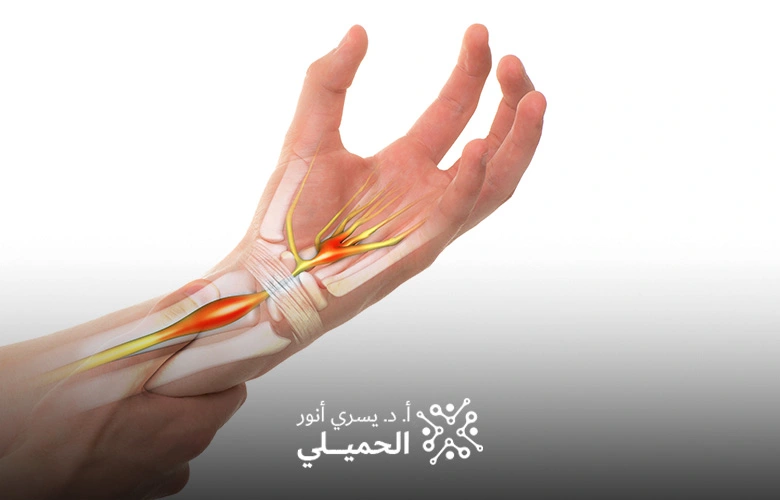
Nerve decompression surgeries are among the most important medical specialties that focus on treating conditions related to nervous system diseases, playing a vital role in helping people who suffer from nerve problems.
Nerve entrapment is one of the diseases that can affect an individual’s ability to carry out daily life normally. The pain resulting from nerve disorders is difficult and extremely painful, and if ignored, it may lead to larger and more complex health problems.
We at Professor Dr. Yousre Anwar Elhemyly’s Center – Professor in the Department of Brain, Nerve, and Spine Surgery at the Faculty of Medicine, Cairo University – fully understand the challenges faced by patients suffering from nerve entrapments. Therefore, we always strive to provide comprehensive and effective care that achieves the best results for our patients, relying on the latest medical technologies and equipment, in addition to a team of highly experienced doctors and specialists in this field.
جدول المحتوي
ToggleEntrapment Neuropathy
Entrapment Neuropathy is a condition where a nerve becomes compressed or trapped between two other bodies in the body. Usually, the nerve is compressed between ligaments and bone. Repetitive movement leads to pressure on or friction with the nerve, causing damage to the tissues covering the outer part of the nerve, which primarily help in transmitting nerve signals. Therefore, when damaged, the nerve’s ability to transmit signals decreases, leading to symptoms such as numbness, tingling, and burning in the fingers or other extremities.
Who are the people most susceptible to nerve entrapment?
Anyone can suffer from nerve compression syndrome, due to various reasons such as obesity, pregnancy, or the use of splints and crutches. Also, people who engage in activities that require repetitive movements such as playing sports, or working in certain fields like construction and carpentry, may be at risk of developing nerve entrapment syndrome.
Conditions that resort to nerve decompression surgeries
Neuropathy or nerve compression can be acute or chronic. Acute entrapment neuropathy usually occurs due to an injury, such as a sprain or fracture, which causes bones or ligaments to move and put pressure on the nerve.
As for chronic entrapment neuropathy, it is caused by repetitive movement, which in turn affects the area where the nerve passes through a narrow space. The surgeon resorts to nerve decompression surgeries in the following cases:
Carpal Tunnel Syndrome
Carpal tunnel syndrome is a condition that affects the nerve responsible for movement and sensation in the hand and wrist, occurring as a result of continuous pressure on the nerve in the wrist area. This pressure can occur due to inflammation of the tendon or muscle inside the carpal tunnel due to repetitive use.
Sciatic Compression
This is the most common type, and the most common cause of sciatica is disc herniation. It includes sensations of tingling, pain, and numbness in the lower back, legs, or feet.
Ulnar nerve entrapment
This includes compression of the nerve in the elbow or wrist.
Peroneal Nerve Entrapment
This is a neuropathy of the nerve located in the knee, which branches from the sciatic nerve.
There are other cases of entrapment neuropathy, and therefore the steps of nerve decompression surgeries associated with each case differ. You can contact us and consult Professor Dr. Yousre Anwar Elhemyly – Professor in the Department of Brain, Nerve, and Spine Surgery at the Faculty of Medicine, Cairo University – about the symptoms you are experiencing and the optimal treatment.
Our techniques in diagnosing nerve entrapment
Prof. Dr. Yousre Anwar Elhemyly performs various tests during the physical examination to evaluate symptoms. If the tests indicate a potential nerve problem, you may receive one or more of these diagnostic tests:
- Electromyography to measure the transmission of nerve signals to muscles.
- Magnetic resonance imaging, neuromuscular ultrasound, or X-rays to check for compressed nerves and look for problems such as arthritis, ligament injuries, and fractures.
Nerve decompression surgery procedures from Professor Dr. Yousre Anwar Elhemyly’s Center
Nerve decompression surgeries are any procedure that relieves pressure on the nerve, including nerve release. For example, if you have a compressed nerve in your elbow or wrist, such as carpal tunnel syndrome, you may experience pain and discomfort, either during the day or at night. If all non-surgical treatment attempts fail, a simple surgery may be needed to relieve pressure on the nerve.
There are some steps that occur during surgery:
- Identifying the affected nerve: Professor Dr. Yousre identifies the compressed nerve and its severity.
- Performing the surgery: Reducing pressure on the nerve by making small incisions in the surrounding ligaments and giving the nerve more space.
- After surgery: Pain may persist for some time and the hand and wrist need time to heal.
- Monitoring results: Observing improvement of symptoms after surgery, and some people may need more time to recover.
- Additional treatments: In some cases, the person may need physical therapy sessions or additional treatment modifications.
Benefits of undergoing nerve decompression surgeries
Undergoing nerve decompression surgeries achieves many benefits, including:
- Nerve decompression surgeries can relieve pain caused by nerve compression or friction.
- Surgeries may help restore functions of damaged nerves, helping to regain normal movement and sensation in affected areas.
- Relieving pressure on nerves can help improve movement and balance, especially in limbs affected by the nerve.
- By restoring nerve functions, the patient can perform daily activities better and more easily.
- Enhancing psychological comfort and reducing stress and anxiety resulting from pain.
- In some cases, nerve decompression surgeries may prevent the worsening of nerve compression conditions and reduce the likelihood of future complications.
Best surgeon for nerve decompression surgeries
Professor Dr. Yousre Anwar Elhemyly is a distinguished figure in the field of nerve decompression surgeries, where his extensive and in-depth expertise in this field is evident through his distinguished academic and professional career:
- Starting with obtaining a Bachelor’s degree in Medicine in December 1992 with honors, continuing with obtaining a Master’s degree in General Surgery in November 1996 with a very good grade, and culminating in obtaining a PhD in Brain, Nerve, and Spine Surgery in November 2000.
- Professor in the Department of Brain, Nerve, and Spine Surgery at the Faculty of Medicine, Cairo University from 2011 until now
- Professor Dr. Yousre is distinguished by his superior ability to diagnose and treat complex cases in nerve decompression surgeries, as he has a deep understanding of the anatomy and functions of the nervous system.
- In his center, he follows advanced technology and modern surgical methods that help him achieve outstanding results and reduce pain and complications to the maximum extent possible.
In addition, Professor Dr. Yousre has good communication skills that help him interact effectively with patients and explain treatment options clearly and understandably, which increases patients’ confidence and enhances their treatment experience.
As an expert in his field, Prof. Dr. Yousre is an ideal choice if you are looking for the best care and surgical intervention in the field of nerve decompression surgeries. Nerve entrapment should not be an obstacle in anyone’s life… Get rid of pain and contact us now.

For direct booking
Book Now